Construction2 min readBy Fuorix
Construction Estimation Software: Why Excel Breaks at 20 Tenders a Month
Every contractor starts estimating in Excel and most never leave. Here is the point where it starts costing you tenders, what purpose-built estimation software does differently, and what it costs to build one around your rate libraries.
Excel is a fine estimating tool, until it isn't
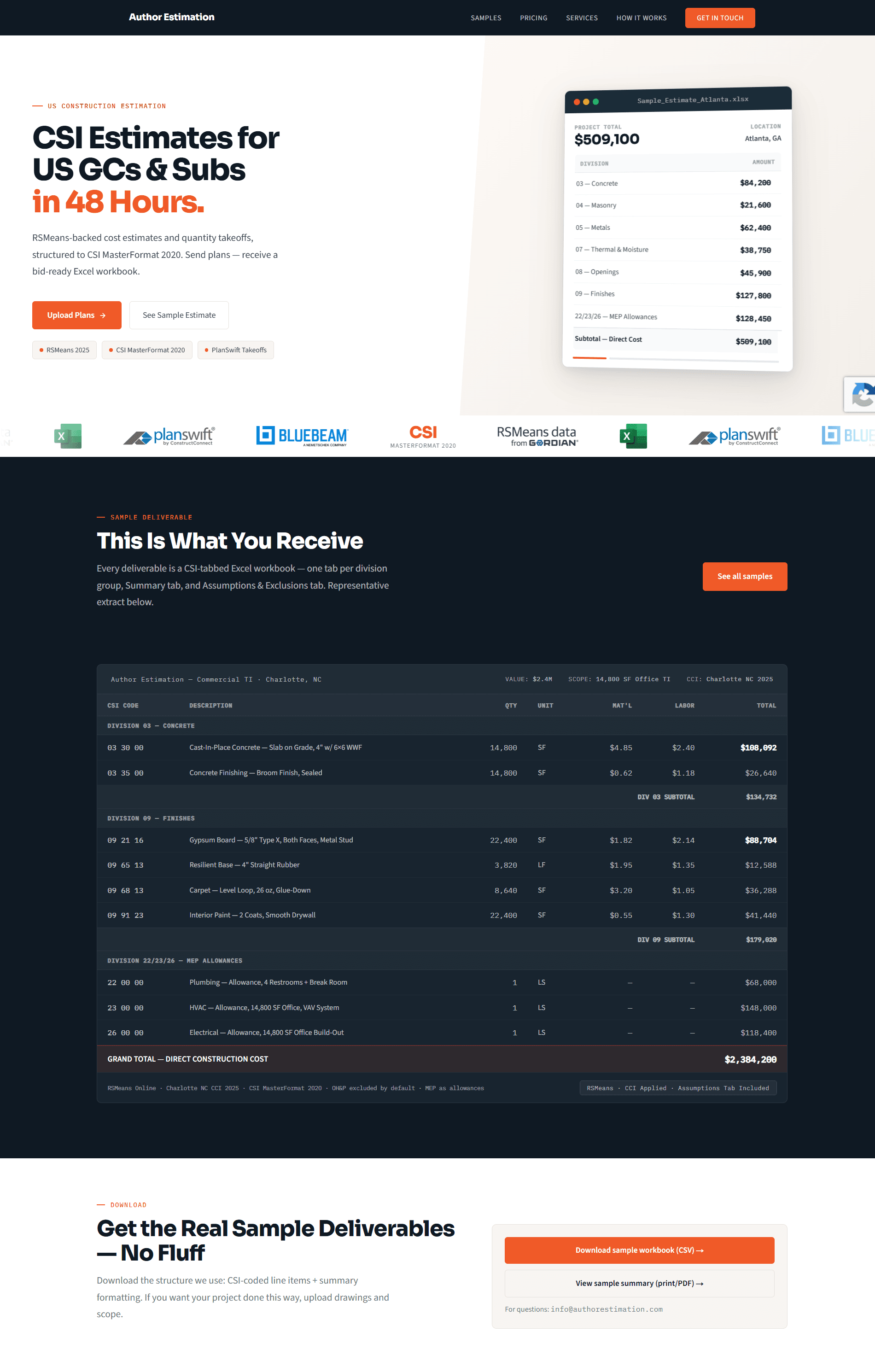
Every estimator we have worked with started in Excel. It is flexible, everyone knows it, and a good template can produce a decent bill of quantities. We built estimation platforms for Tameer Estimations, Author Estimation and Ashlar, and every one of them began as a spreadsheet that had stopped keeping up.
The breaking point is usually volume. Somewhere around 15 to 20 tenders a month, with two or more estimators, the things that made Excel convenient start costing you money.
The five ways it breaks
1. Rates drift. Each estimator keeps their own copy of the rate sheet. Supplier prices change, one copy gets updated, the others quote last quarter's numbers. You find out when the job runs over.
2. Formulas break silently. A row inserted in the wrong place, a range that no longer covers the new items, a markup cell overwritten with a number. The total looks plausible and is wrong.
3. Revisions are unmanageable. Tender revision three lives in an email attachment. Nobody can say what changed between revisions two and three, or which one the client accepted.
4. Nothing is reusable. The assemblies you priced last month (a square metre of blockwork, a bathroom fit-out) are buried in an old file. Every estimate starts from scratch.
5. No link to actuals. Once the job is won, costs are tracked in a different file. You never learn which line items you consistently under-price.
What estimation software does instead
- One rate library for the whole company, by trade and supplier, with a history of changes. Update a rate and every open estimate can be refreshed.
- Assemblies and templates. Price a bathroom once, reuse it with quantities adjusted.
- Structured take-off entry with units, waste factors and markup rules applied consistently.
- Versioned estimates with a diff between revisions and a record of which was sent.
- Branded PDF quotes and BOQs generated in seconds, in your format.
- Estimate versus actual per cost code once the job starts, so your rates improve every project.
What it costs
A quoting and BOQ platform for one company, with a rate library, take-off entry, assemblies, versioning, PDF output and user accounts, is a fixed $2,000 to $6,000 (AED 7,300 to 22,000) and takes 6 to 10 weeks. We import your existing rate sheets and historical quotes, so the first estimate in the new system is faster than the last one in Excel. Project cost tracking, a site app for daily logs and a client approval portal are usually later phases at $1,500 to $4,000 each.
Compare that with the margin on one under-priced tender.
How the project runs
We start by auditing your current templates and keeping the calculation logic you trust. Estimators test with real tenders while Excel is still in use. Switch-over happens when they prefer the new system, which in our experience takes about two weeks.
See what we build for contractors on the construction and estimation software page, or book a call and bring your rate sheet.
Need help with this?
We build the systems described in this article. Let’s talk about your project.
Keep reading
Related articles
Digital TransformationSeptember 18, 2026
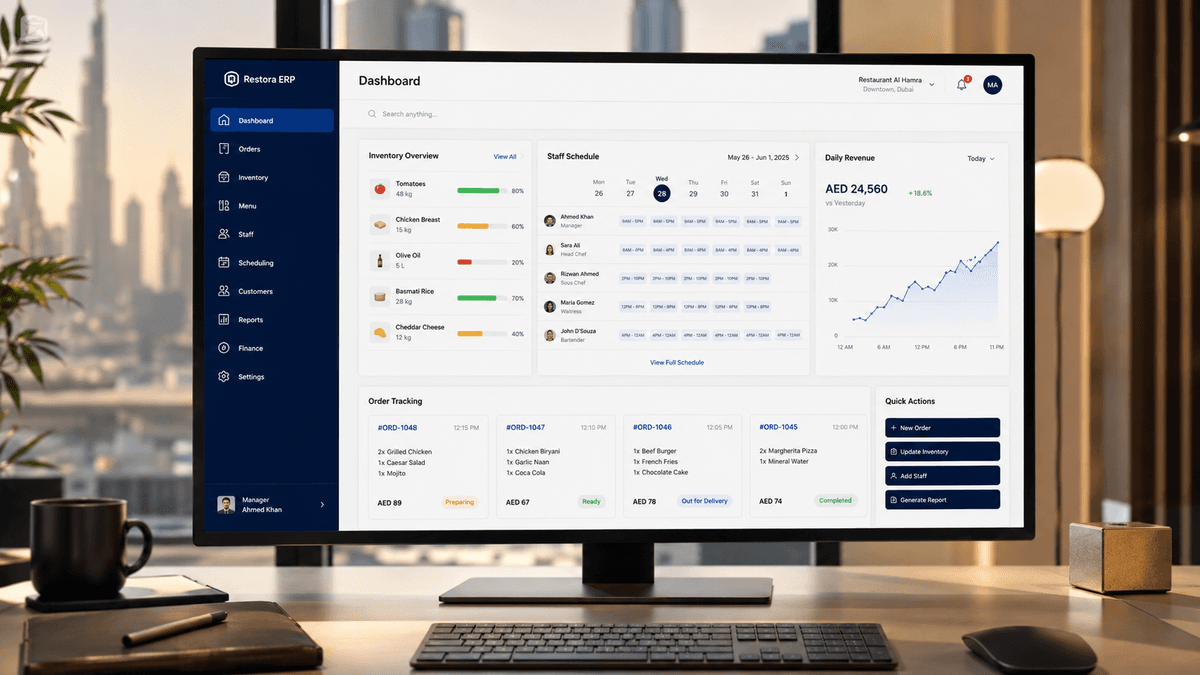
Replace Excel With a Custom App: What It Costs and How Long It Takes
The stock sheet only one person understands, the quoting template with broken formulas, the client list in three versions. Here is what it costs to turn those into a proper multi-user app, how long it takes, and how to tell if you are ready.
3 min read
Read article
PricingMay 8, 2026
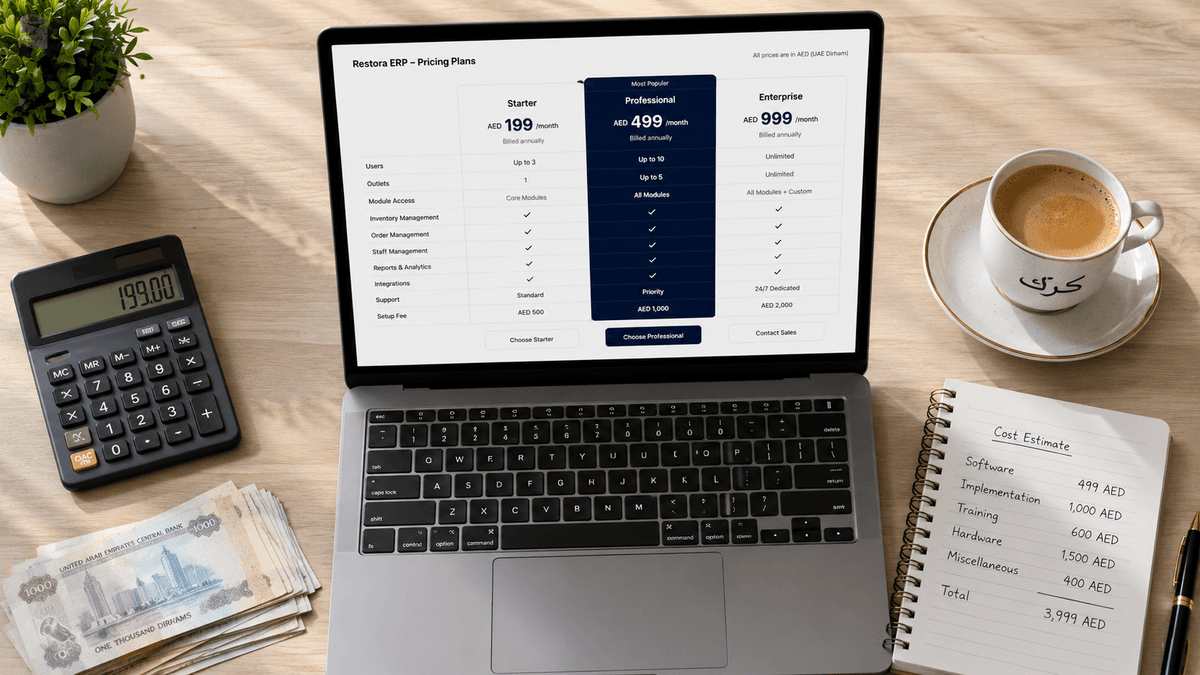
How Much Does a Custom ERP Cost for a Small Business in the UAE? (2026 Prices, Module by Module)
Most 'ERP cost in UAE' articles give you a range from AED 40,000 to AED 300,000 and no way to place yourself in it. Here is our pricing module by module, a worked example for a 25-person business, and what makes the number go up or down.
3 min read
Read article